The folks at Foodbuzz run a monthly feature called 24×24. Each month, they pick 24 food bloggers to plan a meal on a specific day. In 24 hours, 24 meals are enjoyed around the world, and then blogged.
This month, Foodbuzz picked Saturday, May 29th as the day, and Christey and I were selected as one of the 24 hosts.
The meal we submitted was based on an idea I have been mulling over since Christey and I were at Foodbuzz’s Blogger Festival in San Francisco last year. While there, one of the seminars was co-hosted by Brian Kenny, head rancher at Hearst Ranch. The Hearst family (of publishing fame) own tens of thousands of acres of land and only raise grass-fed, free-range beef.
Almost all beef raised in America is “feedlot” beef — cattle either raised entirely on corn, or finished on corn to fatten them up prior to slaughter. Because of their close contact and lack of exercise, there are concerns about the hormones, antibiotics and health of the cattle, how many of these products are passed through to humans, and how the environment is affected.
On one hand, there’s something to be said for capitalism, that McDonalds can deliver half a person’s daily calories for half an hour of minimum wage. On the other hand, while starvation and malnutrition have been reduced, a wide spectrum of other medical problems are now prevalent, from obesity to cancer.
Most of this is covered in Michael Pollans’ excellent (and now legendary) book The Omnivore’s Dilemma. Pollan not only wrestles with the ideas of sustainability, health, and the environment, but also explores economics and “class” issues (yuppyism) of eating sustainable and organic foods.
Hearst is the anti-feedlot. Their cattle is hormone-free, antibiotic-free (they almost never require antibiotics and when one does, it doesn’t get slaughtered with the rest). They have the luxury of roaming around the California countryside, eating grass, pretty much doing what cows evolved to do. They take a bit of a hit in terms of production — cattle is slaughtered after two years instead of 14 months, and they’re a little smaller — but grass-fed beef is much higher in Omega-3 and beta carotene and many other important nutrients.
Putting all the benefits and abstractions aside, my main question was how the taste stacked up. Some describe it as more subtle, while others think it tastes more naturally beefy, as opposed to a more artificial feedlot “punch” of flavor. We were able to sample some Hearst ground beef in Chef Arenstam’s gourmet meatballs and they tasted fantastic, but that’s also an issue I’ve wondered about. Usually, chefs or home cooks proudly advertise that a meal is made with grass-fed beef — the taster knows exactly what he or she is eating. Some taste tests involve a naked bite of steak on a white plate. Most of us don’t eat beef that way at home or in a restaurant.
Which led me to the beef tasting idea for Foodbuzz’s 24×24. Gather a bunch of foodies, and cook beef in traditional ways, accompanied with sauces and side dishes, just like a restaurant or dinner party. Serve a Hearst beef dish and a cut of grain-fed beef from a quality butcher, side-by-side. However, the tasting would be done blind, with only the cook (me) knowing which is which.
In other words, instead of a piece of beef on a toothpick, the diners can compare and contrast beef samples covered with béarnaise sauce, after eating a variety of appetizers. Would there be an obvious difference in taste and texture? For fun, the dinner guests were given ballots to rate taste and texture, as well as offer comments.
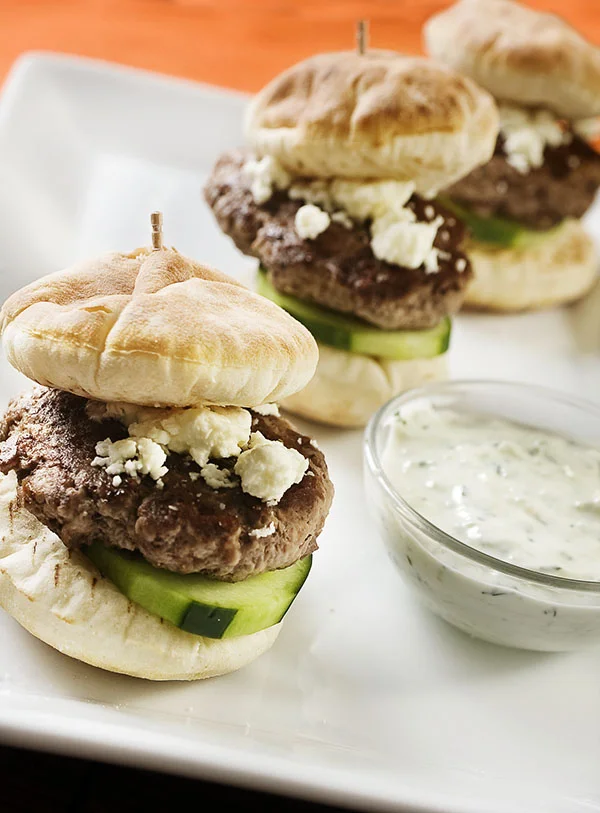
The menu would be filet mignon with béarnaise, skirt steak chimichurri, and mini hamburger “sliders” with a demi-glace mushroom sauce, along with appetizers and sides.
Foodbuzz donated $250 to cover the costs of the meal. Brian Kenny of Hearst was also kind enough to comp the skirt steaks, something they usually only sell as part of their cattle-share program.
Beef inside!